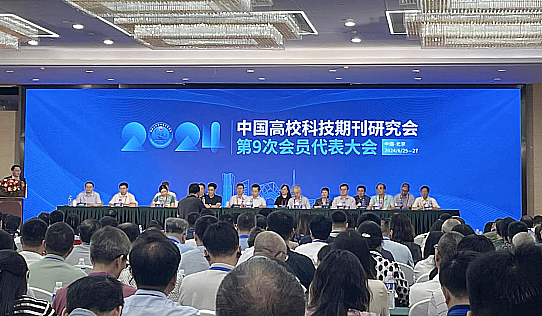
中国高校科技期刊研究会第9次会员代表大会在北京召开,中宣部出版局副局长张怀海、教育部科学技术与信息化司一级巡视员张国辉等领导出席会议并发表..
英文简介:Memes have been defined as basic units of transferrable information that reside in the brain and are propagated across populations through the process of imitation. From an algorithmic point of view, memes have come to be regarded as building-blocks of prior knowledge, expressed in arbitrary computational representations (e.g., local search heuristics, fuzzy rules, neural models, etc.), that have been acquired through experience by a human or machine, and can be imitated (i.e., reused) across problems.The Memetic Computing journal welcomes papers incorporating the aforementioned socio-cultural notion of memes into artificial systems, with particular emphasis on enhancing the efficacy of computational and artificial intelligence techniques for search, optimization, and machine learning through explicit prior knowledge incorporation. The goal of the journal is to thus be an outlet for high quality theoretical and applied research on hybrid, knowledge-driven computational approaches that may be characterized under any of the following categories of memetics:Type 1: General-purpose algorithms integrated with human-crafted heuristics that capture some form of prior domain knowledge; e.g., traditional memetic algorithms hybridizing evolutionary global search with a problem-specific local search.Type 2: Algorithms with the ability to automatically select, adapt, and reuse the most appropriate heuristics from a diverse pool of available choices; e.g., learning a mapping between global search operators and multiple local search schemes, given an optimization problem at hand.Type 3: Algorithms that autonomously learn with experience, adaptively reusing data and/or machine learning models drawn from related problems as prior knowledge in new target tasks of interest; examples include, but are not limited to, transfer learning and optimization, multi-task learning and optimization, or any other multi-X evolutionary learning and optimization methodologies.中文简介:(来自Google、百度翻译)模因被定义为存在于大脑中的可传递信息的基本单位,并通过模仿过程在人群中传播。从算法的角度来看,模因已被视为先验知识的基础,以任意计算表示 (例如,局部搜索启发式,模糊规则,神经模型等) 表示,这些表示是通过经验获得的。人或机器,并且可以在问题上模仿 (即重复使用)。 模因计算期刊欢迎将上述模因的社会文化概念纳入人工系统的论文,特别强调增强计算和人工智能技术在搜索,优化,以及通过显式先验知识整合的机器学习。因此,该期刊的目标是成为高质量的理论和应用研究的出口,这些理论和应用研究的混合,知识驱动的计算方法,其特征可能是以下任何类别的模因: 类型1: 通用算法与人工设计的启发式算法相结合,可以捕获某种形式的先验领域知识; 例如,传统的模因算法将进化全局搜索与特定于问题的局部搜索混合在一起。 类型2: 具有自动选择,适应,并从各种可用选择中重用最合适的启发式方法; 例如,学习全局搜索运算符和多个本地搜索方案之间的映射,给定手头的优化问题。 类型3: 自主学习经验的算法,自适应地重用从相关问题中提取的数据和/或机器学习模型作为感兴趣的新目标任务中的先验知识; 示例包括但不限于转移学习和优化、多任务学习和优化、或任何其他多X进化学习和优化方法。
来稿要求:
论点新颖、论证严密、论据充足、文字精练。论文字数:5000字符-8000字符为宜,图表也要计算在内,不包括英文摘要关键词。
标 题:
文章标题要言简意赅,30字以内。作者署名:署真实姓名,注明作者单位、单位所在省市和邮政编码。摘 要:要用第三人称概括全文,300字以内。
关 键 词:
用3~8个关键词术语反映论文主题。专用符号:名词、术语、数字、计量单位、标点符号和数学符号等,必须符合国家标准;外文人名、地名和术语需译成中文。
图表格式:
文中插图与表格放在相应正文之后,分别按出现顺序用图1、图2或表1、表2统一编号。插图应为黑白色,其序号、标题及注释居中放在图的下方,表格的序号及标题置于表格上方,表注放在表格的下方(建议:由于篇幅限制,除核心期刊外尽量不用或少用图表)。
正文注释:
采用尾注形式,注释号①,②,③等标在相应正文右上角。
章节体例:
章节标题为:一级标题不编号,用黑体居中排,二级标题不编号,用楷体放在相应的文字段首与正文空一字格接排正文。 三级标题分别用1.2.3.顺序编号。文中接排标题用(1),(2)编号。
参考文献:
参考文献置于正文之后,近5年的不少于3条,用[1],[2]……顺序编号,如文章中有内容需要解释请用尾注形式。参考文献不全者不能进入审稿阶段。{参考文献格式如下:(1)图书:作者.书名(版本)[M].出版所在地: 出版社,出版年:(1)页码.
(2)期刊:作者.题目[J].期刊名,年,卷(期):页码.
(3)电子参考文献:作者.题目[OL].(文章的发表日期).[本文引用日期].作者简介:来稿者请附个人简介,内容包括姓名(出生年—),性别,籍贯,民族,学历,工作单位,职称,研究方向,通讯地址,联系电话及电子信箱。
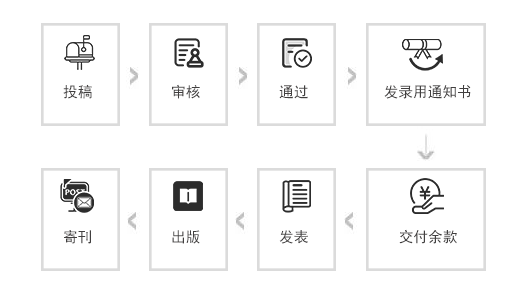
一般情况下,您将在3个工作日内收到审稿结果。如文章有很强的时效性,请说明需要最晚刊发时间。
| 论文编号 | 作者姓名 | 论文题目 | 录用情况 |
|---|---|---|---|
| TG251-13579 | 韩丽炘 孟涛 温娟娟 刘晓琴 | 基于互联网的CBL+TBL教学法在病理学实验教学中的应用 | 已录用 |
| TG251-13681 | 邹隆强 杨清余 钟鸿路 李正南 陈 | 医学运动康复联合消肿止痛方治疗急性踝关节扭伤临床研究 | 已录用 |
| TG251-13794 | 林雨慧 陈霄雯 郑颖彦 朱永凯 贾 | 基于SWOT模型的儿童专科医院临床研究发展策略分析 | 已录用 |
| TG251-13762 | 郑鸿雁 | 重复经颅磁刺激治疗肝脾不调型功能性肛门直肠痛的临床研究 | 已录用 |
| TG251-13891 | 袁召1 赵会谢2 赵海深3 | 真武汤治疗阳虚水泛型慢性心力衰竭患者的临床研究 | 已录用 |
| TG251-13536 | 王杰1 张蕾蕾2 | 血脂和载脂蛋白水平与分化型甲状腺癌及其病理学特征的相关性探究 | 已录用 |
| GD24-5203 | 单一青 高鹏慧 姚瑶 | 思维导图护理对宫颈癌患者行腹腔镜术后康复的影响 | 已录用 |
| GD24-5217 | 林秀娟 梁静文 刘美仙 陈惠贤 | 加速康复外科管理模式在胸腔镜肺段切除术患者围手术期护理中的应用效果 | 已录用 |
| GD24-5213 | 杨素雯 何洁芳 陈妙霞 廖景升 | 健康行为改变整合理论对于宫颈癌晚期放疗患者依从性及自我效能的影响 | 已录用 |
| GD24-5199 | 杨月惠 王凤婷 | 个体护理计划在心脏瓣膜置换手术围手术期患者中的应用 | 已录用 |
邮箱:cnkibianjitg@163.com
QQ:投稿后等待编辑部联系
扫码联系: